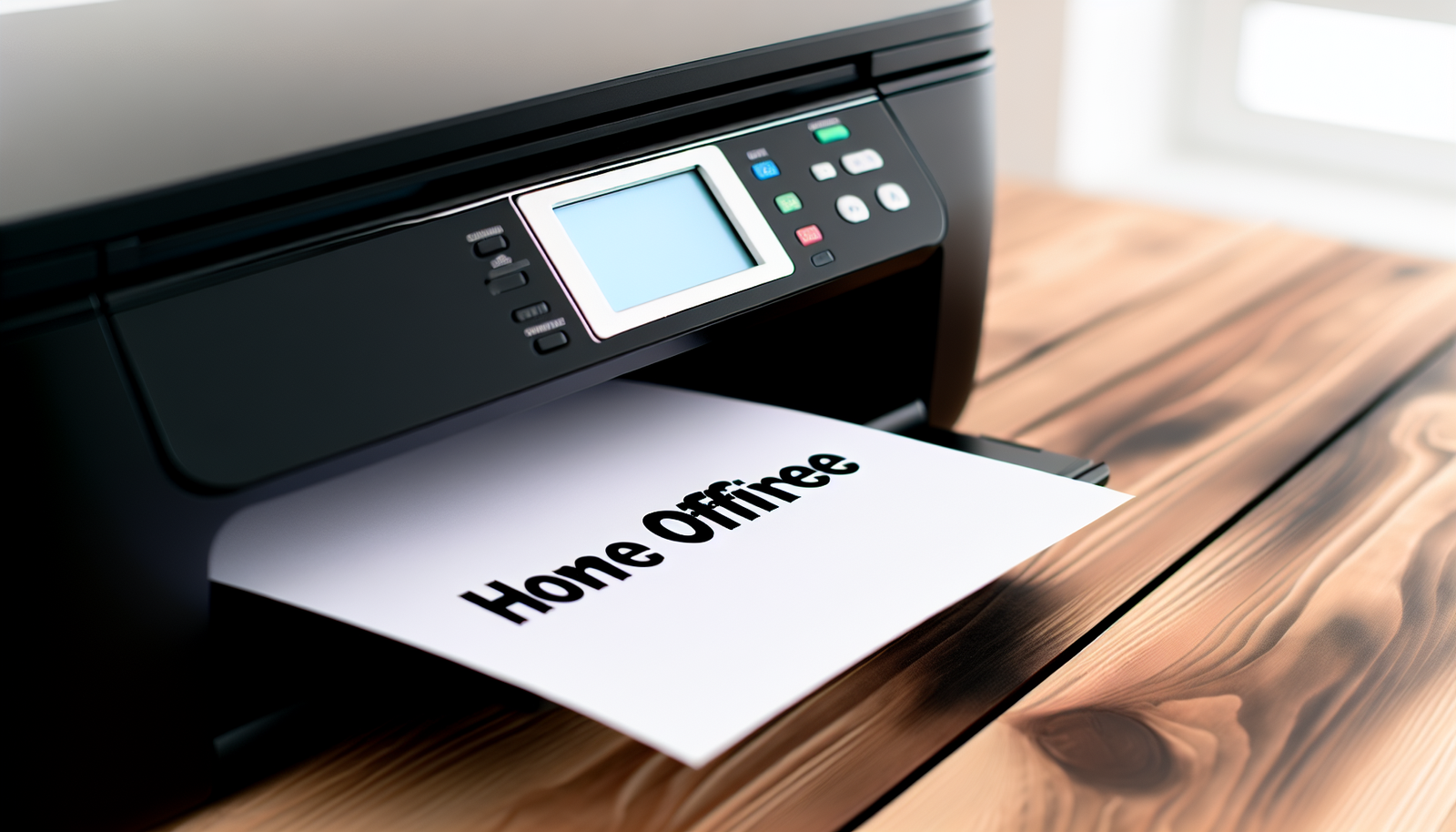
What are laser printers? If you print school forms, shipping labels, or work documents every week, that’s usually the question that comes up right before a purchase.
A laser printer is a toner-based printer that uses a laser, a drum unit, and heat from a fuser to place text and images on paper. It’s built for fast document printing, crisp text, and lower running costs over time than many inkjet printers.
If you’re deciding between a laser printer and an
Why Laser Printers Matter for Home and Home-Office Buyers
What they’re best at
Laser printers are built for text-first work. They’re fast, they handle plain paper well, and they usually produce sharper black text than an
That makes them a strong fit for forms, invoices, labels, handouts, and school packets. If you’ve ever needed to print 30 pages before a meeting and didn’t want to babysit the machine, a laser model makes life easier.
They also tend to fit burst printing better. A home-office user who prints a stack on Monday and barely touches the printer the rest of the week often gets fewer headaches from toner than from dried-out ink.
Brands like HP LaserJet, Brother HL, and Canon imageCLASS built their reputations on this exact use case. If your workload is mostly black-and-white documents, a monochrome printer is usually the cleanest, cheapest path.
When a laser printer is the wrong fit
If you print photos, art projects, or glossy color pages, an
That’s where Epson and other inkjet-focused brands often win. They’re better for school posters, family photos, and anything that needs smooth gradients or glossy media.
You should also check whether you need scanning and copying. Some laser models are print-only, so if you want one box to handle everything, an all-in-one printer may be the better buy.
A parent printing photo projects for school will usually be happier with an inkjet or ink tank printer. A freelancer printing contracts and shipping slips will usually prefer laser.
How Laser Printers Work
Step 1, the laser draws the image on the drum
Inside the printer, a laser beam maps the page onto a photoconductor drum. That drum unit holds an electrostatic pattern, which tells the printer where toner should stick.
That’s the part that makes laser printing so precise. The machine isn’t spraying liquid. It’s building a page image in a controlled pattern before anything touches paper.
If you send a 20-page contract to print, the printer repeats this process page by page. The speed comes from how quickly it can form that image on the drum.
Step 2, toner sticks to the drum and transfers to paper
Toner is a fine powder, not liquid ink. The toner cartridge feeds that powder into the print process, and the charged areas on the drum attract it.
Then the paper passes through and picks up the toner image. That’s why laser output looks clean and doesn’t behave like wet ink on the page.
This is also where running costs start to matter. Toner cartridges usually last longer than ink cartridges, especially if you print a lot of text.
Step 3, the fuser melts the toner onto the page
The fuser uses heat and pressure to bond the toner to the paper. Once that happens, the page comes out dry and ready to stack.
That’s a big reason laser printers are so handy for labels, forms, and office packets. You don’t have to wait for the page to dry, and you don’t have to worry as much about smudging.
The fuser assembly is the final step that makes the print durable enough for normal handling. It’s also part of why laser printers feel so efficient for document work.
Laser Printer vs Inkjet Printer
Speed, text quality, color quality, and running costs
Laser printers usually win on text sharpness and document speed. Inkjet printers usually win on photo quality and richer color output.
If you print contracts, shipping slips, and meeting notes, laser usually makes more sense. If you print family photos, school art projects, or glossy color pages, inkjet is the better match.
Running costs often favor laser for text-heavy use. Ink can be cheaper upfront, but toner often lasts longer and lowers the cost per page over time.
The cheapest printer to buy isn’t always the cheapest printer to own. Your print volume matters more than the sticker price.
Comparison table, laser printer vs inkjet printer
| Feature | Laser Printer | Inkjet Printer | Best For |
|---|---|---|---|
| Speed | Usually faster for documents | Usually slower for text jobs | Busy home offices |
| Text quality | Very sharp on plain paper | Good, but often softer | Forms, contracts, labels |
| Color quality | Good for charts and graphics | Better for rich color and photos | Color documents vs photos |
| Running costs | Often lower for frequent printing | Can be higher over time | High-volume text printing |
| Photo printing | Not the strong suit | Usually much better | Photo-heavy users |
| Clog risk | Lower with burst use | Higher if left idle | Occasional printers |
If your desk is small and your printing is occasional, the choice often comes down to one thing: lower clog risk or better photo output. That’s the real tradeoff.
Pros and Cons of Laser Printers
Pros
| Pros | Why it matters |
|---|---|
| Fast text printing | You get documents out quickly |
| Sharp output | Plain-paper pages look cleaner |
| Toner lasts longer | Fewer supply changes |
| Good for burst printing | Better for people who print in batches |
A home office that prints a few hundred pages a month usually feels this difference fast. You replace supplies less often, and the printer doesn’t complain about sitting idle.
Cons
| Cons | Why it matters |
|---|---|
| Color models cost more | You pay extra if you want color |
| Photo output lags inkjet | Not ideal for glossy prints |
| Can be bulky | Small desks get crowded |
| Some models skip scanning | You may need an all-in-one instead |
A student who wants one printer for essays, art projects, and occasional photos may outgrow a laser model quickly. A compact monochrome printer is great for text, but it won’t cover every use case.
Which Laser Printer Is Right for You?
Choose a monochrome laser printer if you print mostly text
If your pages are mostly black-and-white, this is usually the smartest buy. It’s the simplest laser option, and it usually has the lowest running cost.
That’s why models in the Brother HL and HP LaserJet lines stay popular with home offices. They’re built for documents, labels, invoices, and school forms.
A freelancer printing contracts and shipping labels every week doesn’t need fancy color. A compact monochrome laser printer is usually the cleanest fit.
Choose a color laser printer if you need charts or handouts
Color laser printers make sense when your documents need to look polished. Think charts, classroom handouts, client proposals, and branded presentations.
They’re not photo printers, though. If you want glossy family prints, this isn’t the lane.
A home-office owner printing client-facing handouts with charts can get a lot of value from a Canon imageCLASS or HP Color LaserJet model. Just make sure you’ll use the color often enough to justify the extra cost.
Choose an all-in-one laser printer if you need scanning and copying
If you want one device for printing, scanning, and copying, go multifunction. Brother MFC and some Canon imageCLASS models fit that job well.
This is the better choice for families and home offices that deal with receipts, school packets, and paperwork. You get more utility, but the machine usually takes up more space.
A household that prints school forms, scans receipts, and copies documents can replace multiple gadgets with one all-in-one printer. That’s a real desk-space win.
Choose based on print frequency, not brand name
Brand matters, but workload matters more. HP, Brother, Canon, and Epson all make solid machines, but the wrong printer type will still annoy you.
If you print 10 pages a month, compare toner shelf life and total cost. If you print 300 pages a month, focus on yield, duty cycle, and paper handling.
Two shoppers can both want a cheap printer and still need different models. One prints occasionally, the other prints every day, and they should not buy the same machine.
FAQ
What is a laser printer?
A laser printer is a toner-based printer that uses a laser, a drum, and heat to print sharp text and documents on paper. It uses toner instead of liquid ink.
If you’re comparing printer types, think of laser as the document-first option. It’s a strong fit for forms, labels, and office-style printing.
How does a laser printer work?
A laser printer works by drawing an image on a drum, applying toner powder, transferring that toner to paper, and using a fuser to bond it to the page.
That four-step process is why laser prints dry fast and don’t smudge like wet ink. It’s also why the output is so consistent for text-heavy jobs.
What is the difference between a laser printer and an inkjet printer ?
Laser printers use toner powder and heat for fast text printing, while inkjet printers spray liquid ink and usually do better with photos and color graphics.
Laser usually wins on speed, text quality, and long-term running costs for documents. Inkjet usually wins on photo quality and richer color output.
Do laser printers use ink or toner?
Laser printers use toner, not liquid ink. Toner is a powder that the printer bonds to the paper with heat.
That’s one of the biggest differences buyers miss. If you’re comparing supply costs, you’ll be shopping for toner cartridges, not ink cartridges.
Are laser printers good for home use?
Yes, laser printers can be very good for home use if you print mostly documents, labels, or school forms. Compact monochrome models are often the easiest fit.
If you print a lot of photos or color projects, an
What is a monochrome laser printer?
A monochrome laser printer prints only black and white pages, usually with the lowest running cost in the laser category.
It’s the best option for text-heavy printing. If you mostly print invoices, school forms, or shipping labels, monochrome is usually enough.
What is a color laser printer?
A color laser printer prints in black and color using multiple toner cartridges, but it’s usually best for documents and graphics rather than photos.
That makes it a good fit for charts, handouts, and presentations. If you need photo printing, inkjet still usually does the better job.
Are laser printers cheaper to run than inkjet printers?
Often yes, especially for text-heavy printing, because toner cartridges usually last longer and cost per page can be lower. But total cost depends on the model and how much you print.
If you only print occasionally, compare toner shelf life and replacement cost before you buy. The cheapest printer on the shelf isn’t always the cheapest one to own.
Final Recommendation
If you print mostly text, the best overall fit is usually a monochrome laser printer like the Brother HL-L2350DW. It’s the simplest path for home offices and frequent document printing.
For budget buyers, the HP LaserJet M110we is a smart entry point if you want laser basics without overspending. For premium buyers who need color and scanning, the HP Color LaserJet Pro MFP M479fdw makes more sense.
If you want value, the Brother HL-L3270CDW is a strong middle ground for color documents. If you’re still comparing types, the best laser printer picks and